
 Digital Marketing
The best e-commerce marketing strategies for 2026 look nothing like they did just two years ago. Consumer behavior has shifted, algorithms have matured, and the brands pulling ahead are the ones treating their digital presence as a living system — not a one-time setup. If you're running an online store or planning to launch one, understanding where the real leverage is has never mattered more.
At Milaknight, the focus is exactly here. The web design and development services the team provides aren't just about making things look good — they're built around the commercial reality that a poorly structured site kills marketing spend before it ever gets a chance to work. Every strategic advantage covered below assumes that your website foundation is solid. If it isn't, that's the first conversation worth having.
What Is E-Commerce Marketing?
E-commerce marketing is the practice of driving targeted traffic to an online store and converting that traffic into paying customers — then keeping those customers coming back. It covers everything from how your product pages rank in search engines to how a customer feels after receiving a follow-up email three days after purchase. What's interesting here is that most people treat it as a single channel when it's really an interconnected system of touchpoints.
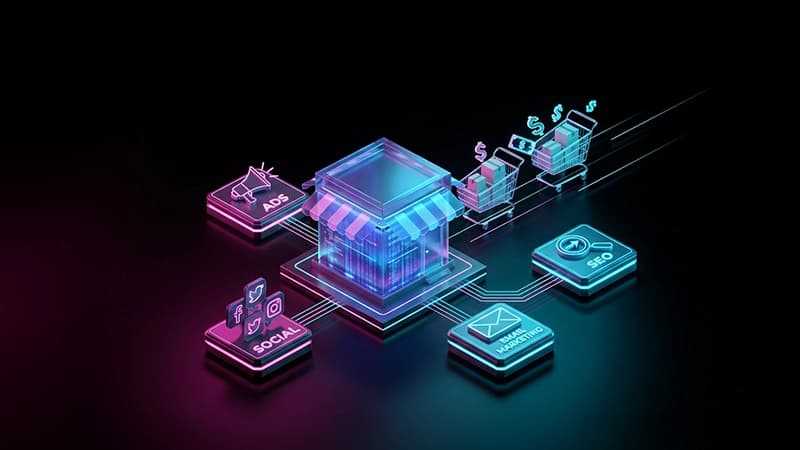
The discipline spans paid advertising, organic search, social media, email automation, content creation, influencer relationships, and conversion optimization. Each of these elements can function independently, but they compound dramatically when they're coordinated. A strong SEO strategy brings in cold traffic; a well-timed email sequence turns browsers into buyers; a loyalty program turns buyers into advocates. That cycle is the engine.
What often gets overlooked is the role the website itself plays in all of this. You can have a flawless ad campaign pointing to a slow, confusing, or visually untrustworthy site — and watch every dollar disappear. This is precisely why professional web design and development is not a cosmetic investment. It's a commercial one. Milaknight approaches every build with that commercial lens, which changes what gets prioritized from the very first wireframe.
Benefits of E-Commerce Marketing
- Global reach without proportional cost increases — A physical store is limited by geography. A well-marketed online store can reach buyers in dozens of countries without opening a single new location. The marginal cost of reaching your thousandth customer is a fraction of what it cost to reach your tenth.
- Measurable return on every channel — Unlike traditional advertising, e-commerce marketing gives you hard data: click-through rates, cost per acquisition, lifetime customer value, and return on ad spend. You know what's working and what isn't, usually within days.
- Compounding organic growth — Paid ads stop the moment you stop paying. SEO and content marketing, when done consistently, build authority that continues delivering traffic long after the initial investment. This is one of the most undervalued long-term assets in e-commerce.
- Personalization at scale — Modern marketing tools allow you to serve different messages to different audience segments automatically. A first-time visitor sees one offer; a returning customer who abandoned their cart sees another. This level of relevance used to require a sales team.
- Faster testing and iteration — You can launch a new campaign, test two versions of a landing page, and have statistically useful data within a week. That speed of learning is a competitive advantage that compounds over time.
- Lower barrier to entry for new brands — With the right strategy and a well-built site, a new e-commerce brand can compete meaningfully with established players. The playing field isn't perfectly level, but it's far more level than traditional retail ever was.
What Are the Different Types of E-Commerce Marketing?
- Search Engine Optimization (SEO) — Optimizing product pages, category pages, and blog content to rank organically for high-intent keywords. Long-tail keywords with clear purchase intent often convert better than broad terms.
- Pay-Per-Click Advertising (PPC) — Running paid campaigns on search engines and shopping platforms to capture demand that already exists. Google Shopping campaigns are particularly effective for product-based businesses.
- Social Media Marketing — Building brand presence and community on platforms where your target audience spends time. Organic content builds trust; paid social scales reach.
- Email Marketing and Automation — One of the highest-ROI channels available. Welcome sequences, abandoned cart flows, post-purchase follow-ups, and win-back campaigns can dramatically increase revenue from your existing customer base.
- Influencer and Affiliate Marketing — Partnering with creators or publishers who already have the trust of your target audience. Performance-based structures align incentives and reduce upfront risk.
- Content Marketing — Publishing genuinely useful content — buying guides, comparison articles, how-to posts — that attracts buyers early in their research phase and builds category authority over time.
- Conversion Rate Optimization (CRO) — Systematically improving the percentage of visitors who complete a purchase. This includes everything from page layout and load speed to trust signals and checkout flow. A well-developed site is the prerequisite here.
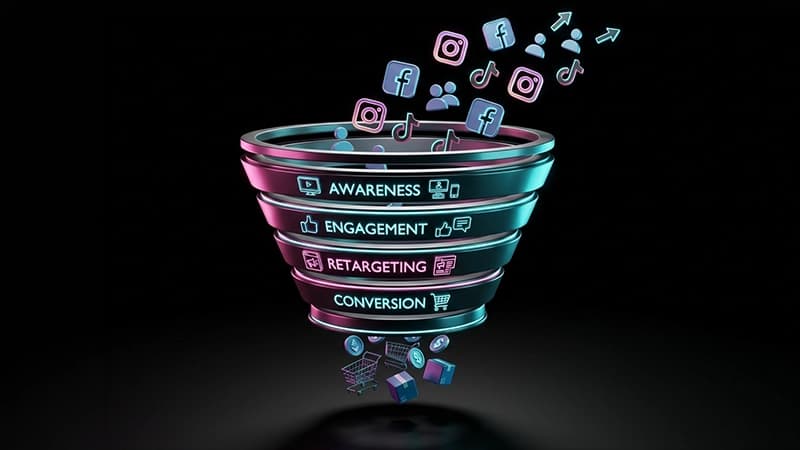
- Retargeting — Re-engaging visitors who left without purchasing through carefully timed ads across search, social, and display networks. Done well, retargeting is one of the most efficient uses of ad budget.
E-Commerce Marketing Trends in 2026
Artificial intelligence is no longer a novelty in e-commerce marketing — it's the baseline. In 2026, the brands winning are using AI not just for chatbots but for dynamic pricing, predictive inventory management, and hyper-personalized product recommendations that adjust in real time based on browsing behavior. The customer experience on a well-optimized AI-enhanced store feels intuitive in a way that was genuinely difficult to achieve just a few years ago.
Short-form video has matured from a trend into a primary discovery channel. Buyers — especially in the 18 to 40 demographic — are finding products through video before they ever reach a search engine. Here's the thing: this means your product needs to be demonstrable, and your brand needs a visual personality. Stores that have invested in video-friendly web design and development, with fast-loading pages and seamless mobile experiences, are converting this discovery traffic far more effectively than those that haven't.
First-party data strategies have become non-negotiable. With third-party cookies largely gone and privacy regulations tightening across major markets, brands that built their own email lists, loyalty programs, and customer data infrastructure are operating with a structural advantage. Every new customer relationship is an asset. Milaknight builds sites with this data-capture infrastructure baked into the architecture, not bolted on as an afterthought.
Voice and visual search are also growing faster than most merchants realize. Optimizing product descriptions for conversational queries and ensuring product images meet the technical requirements for visual search indexing are both areas where early movers are picking up meaningful organic traffic. These aren't futuristic considerations anymore — they're present-tense opportunities that a skilled web development partner can help you capture.
How to Get Started with E-Commerce Marketing
- Audit your website before spending a single dollar on traffic — If your site is slow, hard to navigate, or visually unconvincing, every marketing channel will underperform. Get an honest technical and UX assessment first. This is table stakes, not optional prep work.
- Define your audience with uncomfortable specificity — Not "women aged 25-45" but "women aged 28-38 who are renovating their first home and care about sustainable materials." The more precise your audience definition, the more relevant your messaging becomes across every channel.
- Choose two or three channels and go deep before expanding — Spreading budget thin across six platforms produces mediocre results everywhere. Pick the channels where your specific audience is most active, and build genuine competency there before diversifying.
- Set up your measurement infrastructure — Install analytics correctly, configure conversion tracking, and establish baseline metrics before you launch any campaigns. You cannot optimize what you cannot measure. This step is boring and critical.
- Build your email list from day one — Regardless of which paid or organic channels you use, your email list is the only marketing asset you fully own. A welcome discount, a useful lead magnet, or a loyalty sign-up at checkout can start building this list immediately.
- Create content that addresses real buyer questions — What does your ideal customer search for when they're in research mode? Answer those questions better than anyone else. This builds both organic traffic and brand credibility simultaneously.
- Test, measure, and iterate on a fixed cycle — Set a review cadence — monthly at minimum — where you look at what's working, cut what isn't, and double down on what is. Marketing without this loop is just spending money and hoping.

